AI news
Robots That Try Again: This Week's AI News Points to Learning by Testing
New releases from NVIDIA researchers, Meta, Physical Intelligence, Elorian and RoboParty share two traits: systems built to check and fix their own work, and tools released openly for anyone to study.
A robot arm twisting a scrambled Rubik's Cube into place is the kind of demo that goes viral. The more important story is how it learned: by writing its own instructions, watching them fail, and fixing them, again and again.
That robot, part of an NVIDIA research system called ASPIRE, was one of several AI and robotics releases in the past few days that point the same way. Across labs and companies, the newest systems are built less to be right the first time and more to test and improve. And a growing share of them are being released openly, so anyone can study how they work. For Mat-Su Valley homeschool families, both trends put a premium on one skill: directing that loop.
Robots that learn by revising
In ASPIRE, an AI model writes a robot's control program, runs it, and studies detailed feedback, including what the camera saw and whether anything collided. Then it diagnoses failures and tests a repair, according to NVIDIA's project page. Fixes that work are stored in a growing "skill library," so the robot doesn't start from zero on its next task.
The payoff showed up on tasks the system had never seen. On a benchmark of unfamiliar multi-step tasks, ASPIRE succeeded 31% of the time, compared with 4% for earlier methods, the researchers reported in their paper. The code is public on GitHub under the Apache 2.0 license.
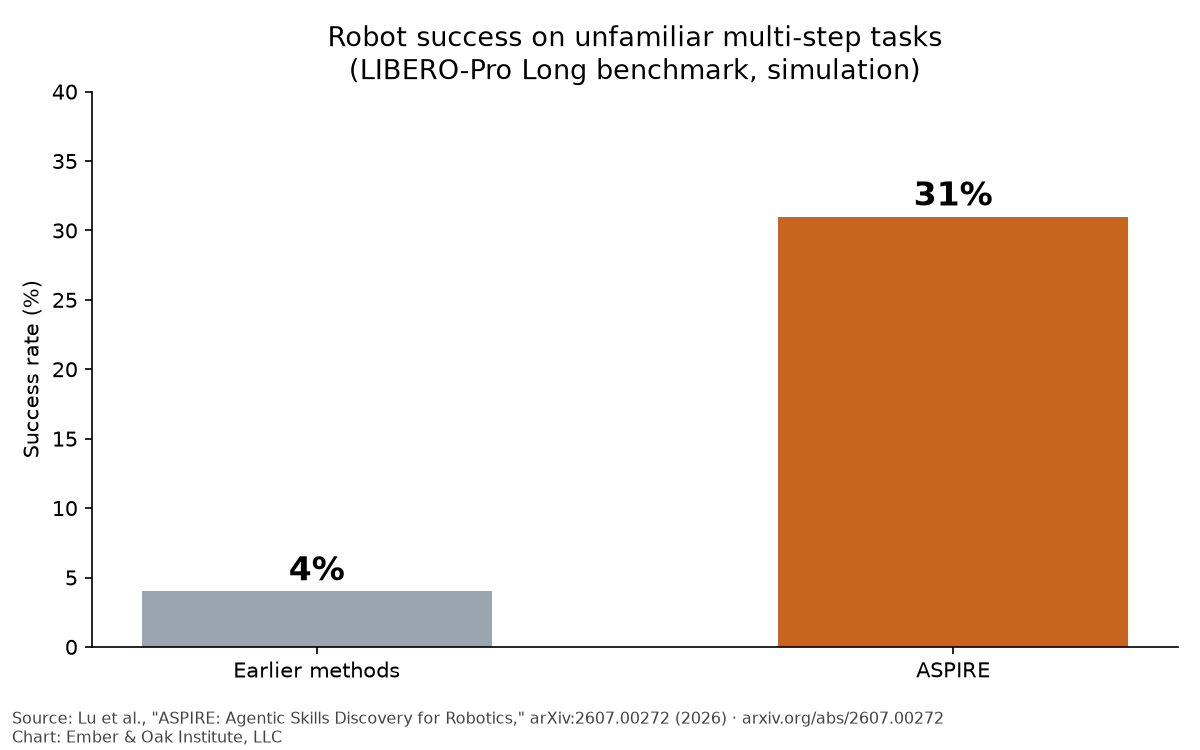
That still means the robot failed most of the time. But the lesson is in the direction of travel: saved experience and repeated testing made the system far better than approaches that started fresh each time.
Taking a second look
The same idea is spreading to vision. Palo Alto startup Elorian on Oct. 16 released Glimpse, which it calls a "visual thinking model." Instead of glancing at an image once and then reasoning only in words, Glimpse can return to a picture or video mid-thought to follow moving objects and recheck details, the company said.
Elorian was measured about its progress. It called Glimpse's visual skills "an early step" and said robot control remains "work ahead" (Elorian). Its claims of matching larger models come from its own testing and have not been independently confirmed.
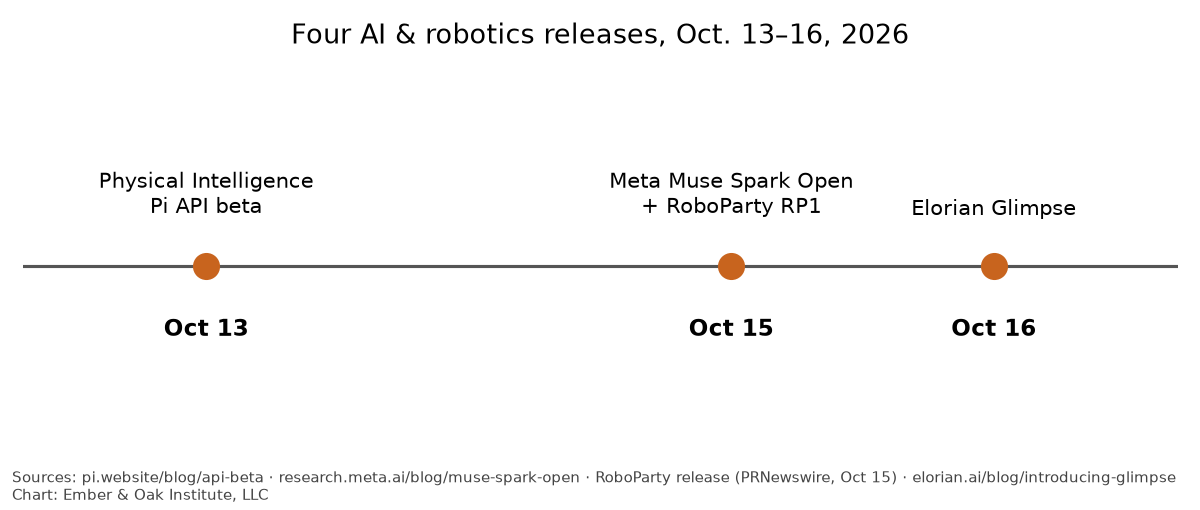
Robotics company Physical Intelligence built the loop into a product. Its Pi API beta, announced Oct. 13, lets robotics teams upload examples of a task, have the company fine-tune its general robot AI on them, and then use evaluation results to guide the next round, according to the company. Access is through a waitlist.
Blueprints in the open
The second thread is openness. On Oct. 15, Meta released Muse Spark Open, a large AI model for coding and multi-step tasks whose "weights," the learned numbers that make it work, can be downloaded. Meta called it "the most capable US open-weight model to date" and said it can run on two high-end Apple desktop computers (Meta). It comes under Meta's own license, with conditions, and Meta's model card recommends adding safety guardrails when it's deployed.
The same day, Shanghai-based RoboParty launched RP1, a humanoid robot about 1.3 meters tall. It has open hardware and software, from mechanical designs and circuit boards to firmware and walking-training code (RoboParty release; GitHub).
Open blueprints don't make these systems easy to run. Both still demand serious hardware and expertise. But they let a motivated learner study how a real humanoid or skill library is organized from a kitchen table.
One idea to watch: AI play-testers
Elorian also names game development among Glimpse's possible uses, saying vision like this could help developers "build and test interactive environments" (Elorian). An AI that watches a game the way a player does is a goal for now, not a product.
What it means at home
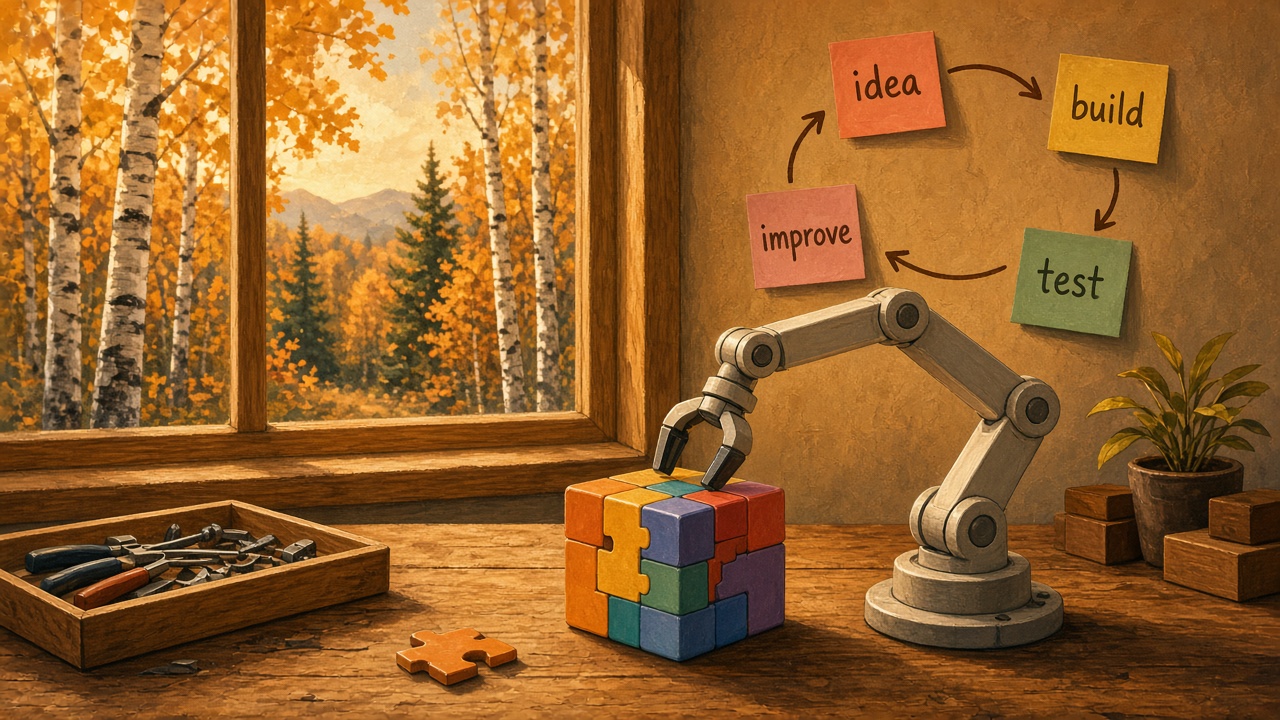
Taken together, the week's news doesn't say people matter less. It says the valuable work is steering: choosing a good goal, describing it clearly, judging the result honestly and deciding what to fix. At Ember & Oak Institute, LLC, we call that loop idea, build, test, improve. Learners direct AI tools through it rather than hand-coding.
Families can try it this weekend. Pick a small project, such as a simple game, a short story, or a plan for a backyard weather sensor. Describe the idea, have an AI tool build a first version, test it, write down one improvement, and repeat. That's the same loop the robot labs are running.
Sources
- ASPIRE project page, NVIDIA
- ASPIRE paper, arXiv:2607.00272
- ASPIRE code, GitHub
- Introducing Glimpse, Elorian
- Pi API beta, Physical Intelligence
- Introducing Muse Spark Open, Meta
- Muse Spark Open model card
- RP1 launch release, RoboParty
- RP1, GitHub